
Advocate-on-Record Examination: A Crash Course
Comprehensive Preparation for Practice and Procedure, Drafting, Professional Ethics, and Leading Cases.

Pay via EBC Webstore
Skills you'll learn
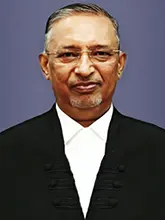
The Crash Course for AOR Exams in Supreme Court conducted by reputed EBC under the coaching by erudite and experienced AOR Dr. Charu Mathur, who hails from a reputed family of Judges and Lawyers is indeed an effective guidance to young budding Lawyers who seek to carve a niche for themselves in the Apex Court. Dr. Charu was Host in one of the Webinar in which I spoke and interacted with her on complex tax issues and it clearly indicated her mature and balanced views. I am happy that she takes out time from her busy professional career to lead from the front her younger brethren. I wish her and her tutelage all the best...
Justice Dr Vineet Kothari , Former Acting Chief Justice, Gujarat High Court, Senior Advocate, Supreme Court of India
This course will boost the AOR aspirants in achieving their goal because they have a great mentor Dr Charu Mathur ma’am who not only instils confidence and knowledge but also shows the right way. I express gratitude to be a part of this course by EBC Learning.
Adv. Kunal Yadav , AOR, Supreme Court of India
The EBC Learning's online course helped with last-minute revision. It gives one the confidence to write the exam and also helps clear last-minute doubts. EBC books, as well as learning materials, help connect with like-minded people.
Vishakha K. , AOR, Supreme Court of India
The training course provided by EBC Learning was of great help to me while preparing for the AOR Exam. Dr Charu Mathur's lectures were informative and guided me throughout the whole process. The initiative of EBC Learning in helping the AOR aspirants prepare for the AOR exam is well appreciated, and I thank EBC and Dr Charu Mathur for guiding me throughout the preparation for the AOR Exam.
Ravi Tyagi , AOR, Supreme Court of India
The online course was very well designed. Thanks to Dr Charu Mathur madam whose untiring effort to cover the course with valuable inputs was unparalleled.
D. Siva Rami Reddy , AOR, Supreme Court of IndiaAbout This Course
The Supreme Court's Advocate-on-Record Examination is the only gateway to filing and pleading directly before the highest court in India — and one of the toughest professional examinations in the country. Of more than twenty lakh registered advocates, only about 3,300 are AORs.
For an advocate already running an active practice, the hardest part of preparing is not the syllabus. It is the time. Live cohorts run on fixed evenings and weekends, often clashing with court hours, client conferences, and travel.
This course is built for that reality. It is the complete EBC AOR course delivered self-paced — every lecture, e-book, Bare Act and leading case unlocked from day one, and yours for 1 year, across both the 2026 and 2027 examination cycles.
The course includes B.R. Agarwala's Supreme Court Practice and Procedure, EBC's Bare Acts of the Supreme Court Rules, 2013 and the Advocates Act, 1961, along with the full text of all 86 leading cases on SCC Online — the only AOR preparation subscription in India that brings these resources together, because no one else publishes them.
Who This Course is For
This course is designed for practising advocates with at least four years' standing before the Supreme Court who are eligible for AOR Examination and want a serious, self-directed preparation that fits around an active litigation practice. It is also useful for advocates approaching eligibility who want to begin reading early and finish ahead of the curve.
You will benefit most from this course if you:
- Cannot reliably commit to fixed live-class evenings while running a Supreme Court practice.
- Want one trusted, end-to-end course over piecing notes together from multiple sources.
- Prefer studying from the primary sources — Agarwala, the Supreme Court Rules 2013, the Advocates Act, and the official leading-cases list — rather than condensed summaries.
- Want the freedom to revise a topic as often as needed, without missing live sessions.
Why Choose This Course
- Self-paced — built around your court calendar. Entire library unlocked on day one. No fixed class timings to clash with your board, your conferences or your travel.
- Taught by Dr Charu Mathur, AOR. 20+ years of Supreme Court practice across constitutional, commercial, civil and criminal matters.
- All four papers, fully covered. Practice & Procedure, Drafting, Professional Ethics & Advocacy, and Leading Cases — focused micro-lectures plus past-paper walk-throughs.
- The standard reference, included. B.R. Agarwala's Supreme Court Practice and Procedure on EBC Reader, with EBC's Bare Acts of the Supreme Court Rules, 2013 and the Advocates Act, 1961.
- All 86 leading cases in full text, on SCC Online. Pre-curated reading lists mapped to the official syllabus.
Course Includes
|
|
|
 |
Recorded Live Classes 50+ structured video lectures covering all four AOR papers, organised topic-by-topic. |
 |
Videos Paper-wise walkthrough videos taking you through past-paper question patterns and answer strategy. |
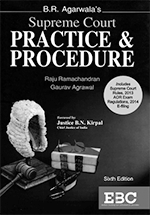 |
E-Book BR Agarwala's Supreme Court Practice and Procedure (EBC) on EBC Reader. |
 |
EBC Bare Act EBC's Supreme Court Rules on EBC Reader. |
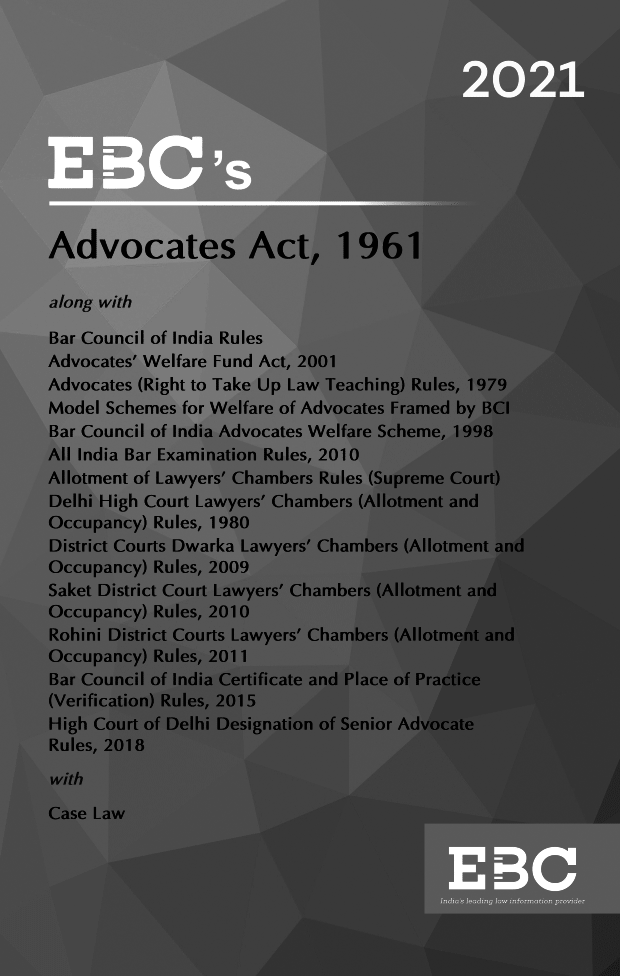 |
EBC Bare Act Advocates Act on EBC Reader. |
 |
86 Leading Cases Full Text of Cases for the AOR Exam are provided from SCC Online. |
- I. E-Books
- a) E-Books
- II. Exam Notification
- ⚑ AOR Exam Notification
- 📕 Paper I (Practice & Procedure)
- ▸ Video 1: Introduction
- ▸ Video 2: Who is an AOR?
- ▸ Video 3: Need for an AOR
- ▸ Video 4: How to become an AOR?
- ▸ Video 5: Overview of the examination
- § Relevant sections
- ▸ Video 6: Origin of the Supreme Court
- ▸ Video 7: Original jurisdiction of the Supreme Court
- ▸ Video 8: Extraordinary original jurisdiction
- ▸ Video 9: PIL jurisdiction under Article 32
- ▸ Video 10: Appellate jurisdiction under Article 132
- ▸ Video 11: Appellate jurisdiction under Article 133—Civil matters
- ▸ Video 12: Appellate jurisdiction under Article 134—Criminal matters
- ▸ Video 13: Statutory appellate jurisdiction
- ▸ Video 14: Extraordinary appellate jurisdiction—Article 136
- ▸ Video 15: Advisory jurisdiction
- ▸ Video 16: Statutory references
- § Relevant sections
- ▸ Video 17: Election petition
- ▸ Video 18: Transfer jurisdiction
- ▸ Video 19: Contempt jurisdiction
- 📚 Compulsory Reading Material
- ▸ Video 20: Review jurisdiction
- ▸ Video 21: Curative jurisdiction
- ▸ Video 22: Arbitration and Conciliation Act, 1996
- § Relevant sections
- ▸ Video 23: Article 142—Power to do complete justice
- ✅ Paper I (Walkthrough Videos)
- ▸ Understanding the AOR examination- Part i
- ▸ Understanding the AOR examination- Part ii
- ▸ Understanding the Supreme Court’s original jurisdiction and Article 32
- ▸ Limits of Article 32, writ of certiorari, and evolution through PILs and curative petitions
- ▸ Article 131, transfer of cases, and public interest litigation
- ▸ Advisory jurisdiction of the Supreme Court under Article 143
- ▸ Appellate jurisdiction of the Supreme Court — Articles 132 & 133
- ▸ Criminal appellate jurisdiction under Article 134
- ▸ Special leave petitions and the doctrine of merger — Article 136
- ▸ Understanding review jurisdiction of the Supreme Court
- ▸ Curative jurisdiction – The Supreme Court’s final safeguard
- ▸ Supreme Court rules and origin of the advocate-on-record system
- ▸ Court sittings, registry processes & bench formation
- ▸ Chamber work & bench constitution in the Supreme Court
- ▸ E-hearings, special procedures and understanding affidavits
- 📕 Paper II (Drafting)
- ▸ Video 24: Preparation for the drafting paper
- ▸ Video 25: Affidavit
- ▸ Video 26: Nomenclature of parties
- ▸ Video 27: Few rules regarding drafting/filing
- § Relevant sections
- ▸ Video 28: Some more tips
- ▸ Video 29: Analysing the drafting question paper
- ✅ Paper II (Walkthrough Videos)
- ▸ Paper ii: Format, approach & exam strategy
- ▸ Structure of an SLP (civil)— Checklist, format & components
- ▸ Drafting the SLP— Questions of law, grounds, certificates, and affidavit
- ▸ Drafting SLP (criminal): Strategy, structure & examination tips
- 📕 Paper III (Professional Ethics & Advocacy)
- § Relevant sections
- ▸ Video 30: Preparing for professional ethics and advocacy
- ▸ Video 31: Cases violating the confidence of the client
- ▸ Video 32: Violating the duty towards the court
- ▸ Video 33: Acting without authority of the client
- ✅ Paper III (Walkthrough Videos)
- ▸ Understanding paper III: Approach, SLP structure, and the seven lamps of advocacy
- ▸ Statutory framework and court-related professional duties
- ▸ Duties to clients, opponents, and colleagues
- ▸ AOR responsibilities and foundational misconduct cases
- 📕 Paper IV (Leading Cases)
- ▸ Video 34: Preparing for leading cases
- ▸ Video 35: Categorising leading cases
- ▸ Recording: T.M.A. Pai Foundation v. State of Karnataka, P.A. Inamdar v. State of Maharashtra, Pramati Educational and Cultural Trust v. UOI
- ▸ Recording: Joseph Shine v. Union of India
- ▸ Recording: Ssangyong Engineering v. NHAI
- ▸ Recording: Balram Prasad v. Kunal Saha
- ▸ Recording: Focussed Session on Tribunalisation
- ▸ Recording: Sharad Birdhichand Sarda v. State of Maharashtra and Sushila Aggarwal v. State NCT of Delhi
- ▸ Recording: Jarnail Singh v. Lachhmi Narain Gupta
- ▸ Recording: Indra Sawhney v. Union of India
- ▸ Recording: Vellore Citizens' Welfare Forum v. Union of India
- ▸ Recording: Republic of Italy v. Union of India
- ▸ Recording: Municipal Corp., Ujjain v. BVG India Ltd.
- ▸ Recording: Mafatlal Industries Ltd. v. Union of India
- ▸ Recording: Gujarat Urja Vikas Nigam Ltd. v. EMCO Ltd.
- ▸ Recording: Lalita Kumari v. Govt. of UP
- ▸ Recording: Shanti Conductors (P) Ltd. v. Assam SEB
- ▸ Recording: Common Cause v. Union of India
- ▸ Recording: Technip SA v. SMS Holding (P) Ltd.
- ▸ Recording: I.R. Coelho v. State of T.N.
- ▸ Recording: Gujarat Urja Vikas Nigam Ltd. v. EMCO Ltd. & SBP & Co. v. Patel Engg. Ltd.
- ▸ Recording: Rupa Ashok Hurra v. Ashok Hurra
- ▸ Recording: Supreme Court of India v. Subhash Chandra Agarwal
- ▸ Video 36: Conclusion
- ✅ Paper IV (Walkthrough Videos)
- ▸ Circumstantial evidence and dying declarations – The Sharad Birdichand Sarda judgment
- ▸ Jurisdiction, fair trial, and separation of powers – The A.R. Antulay case
- ▸ Arrest procedures, custodial safeguards, and state liability – The D.K. Basu guidelines
- ▸ Workplace safety, gender justice, and the Vishaka guidelines
- ▸ Speedy trial, CBI investigations, and scientific techniques – Three key criminal law decisions
- ▸ Jurisdiction, sovereign authority, and mandatory FIR registration
- ▸ Free speech protections and the law on remission and life sentences
- ▸ Gender justice, sexual violence jurisprudence, and preventing honour crimes
- ▸ Equality before law, anticipatory bail, and land acquisition clarified
- ▸ Understanding tribunalisation of the judiciary
- ▸ The Kesavananda Bharati case and the basic structure doctrine
- ▸ The Tenth Schedule, doctrine of severability and NJAC
- ▸ Constitutional amendments on education and reservation
- ▸ Reservation in promotions: Nagaraj and Jarnail Singh
- ▸ Affidavits and foundational case laws
- ▸ Judgments on IPR, consumer protection, contract law, and tenders
- ▸ IBC, judicial appointments, Aadhaar, competition law, and cryptocurrency
- III. Annexure A: 2023 Full Text of Revised List of Leading Cases (86 Cases)
- 𝍭 Index (Full text of cases)
- IV. Annexure B: Paper 3: Important Cases (46 Cases)
- 𝍭 Paper 3: Important cases
Instructors

Dr Charu Mathur
AOR, Supreme Court
Dr Charu Mathur is an Advocate on Record with the Supreme Court of India. She has over 20+ years of rich and diverse expertise in corporate, commercial, civil, criminal and constitutional law matters. She is the creator of this course.

EBC Learning Staff
Editorial & Faculty Team, EBC Learning
EBC Learning is the online legal-education platform of Eastern Book Company, India's leading legal publisher for more than seventy-five years. EBC Learning Staff assisted in the preparation of materials for this course.
Limit Reached or Trial Expired
You have reached the limit of 2 audit enrollments or your trial period has expired.